A brake job costs roughly $100 to $300 per axle for pads only, or $200 to $500 per axle when rotors are replaced at the same time, according to RepairPal's national repair cost database. A full vehicle service covering both front and rear axles with pads and rotors typically runs $400 to $1,000. Those ranges shift based on your vehicle, the parts grade, and local labor rates -- sometimes significantly.
What Does a Brake Job Actually Include?
The term "brake job" gets used loosely, so it helps to know what you are actually buying before you authorize any work.
Brake pads are the friction material that clamps against the rotor to slow the vehicle. They wear down over time and need periodic replacement -- typically every 25,000 to 70,000 miles depending on driving style, vehicle weight, and pad compound. This is the most common brake service.
Rotors (also called brake discs) are the metal discs the pads press against. They are usually replaced when worn below the manufacturer's minimum thickness, when they are warped, or when they are deeply scored. A shop should measure rotor thickness and report it to you.
Hardware kits include clips, shims, and anti-squeal components that hold pads in place and reduce noise. Most quality brake jobs include a hardware kit; skipping it to save a few dollars often leads to brake noise and premature wear.
Brake fluid flush is sometimes recommended alongside a brake job, especially on vehicles over four years old. Brake fluid absorbs moisture over time, which lowers its boiling point and can cause spongy pedal feel. The service typically adds $60 to $120 to the bill. Whether you need it depends on when the fluid was last changed and whether your vehicle's manual specifies an interval.
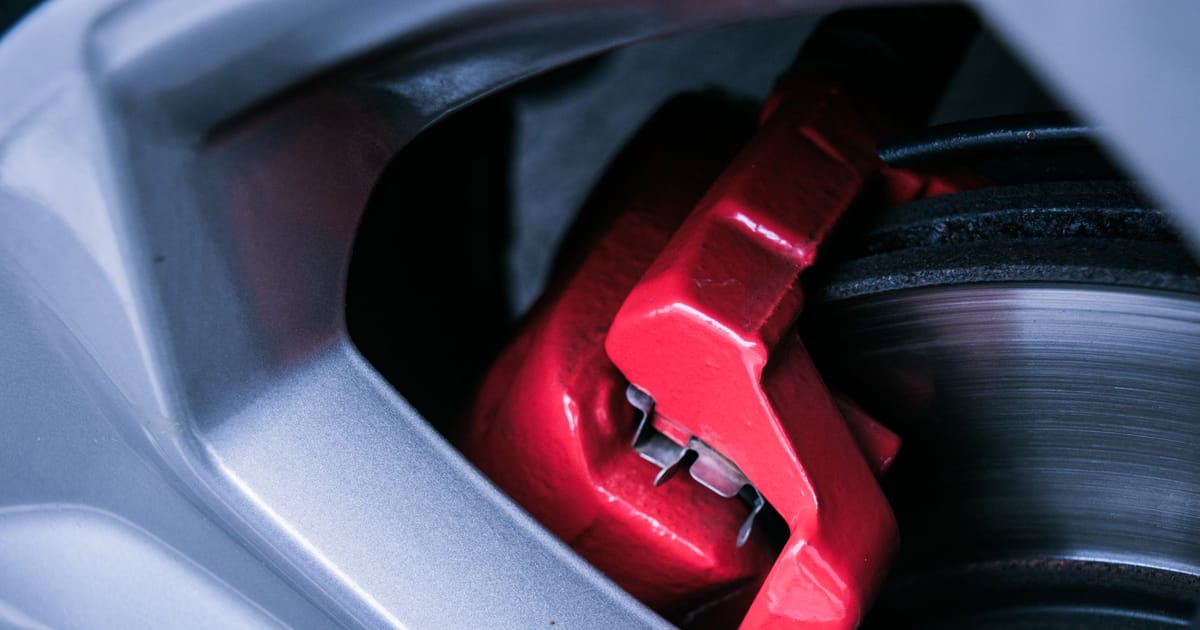
Calipers are hydraulic clamps that squeeze the pads against the rotor. They are not replaced during routine service. If a caliper is seized, leaking, or not retracting properly, replacement is warranted -- but you should see evidence before approving it.
Get an itemized estimate before you approve anything
Ask for a written breakdown: parts cost by line item, labor hours, and any shop fees. A legitimate shop will provide this without hesitation. If the quote is verbal-only or lists "brake service" as a single lump sum, ask for line-item detail. You have the right to a written estimate before any work begins.
Typical Cost Ranges by Service Scope
The table below shows common brake service scenarios. Figures are drawn from RepairPal's national repair cost data, which aggregates estimates across thousands of shops and vehicle types.
| Service Scope | Typical Cost Range (per axle) | What's Included |
|---|---|---|
| Pads only | $100 -- $200 | New pads, hardware kit, labor |
| Pads + rotors | $200 -- $500 | New pads, new rotors, hardware kit, labor |
| Full vehicle (both axles, pads + rotors) | $400 -- $1,000 | All four corners, full hardware, labor |
| Caliper replacement (per side) | $150 -- $400 | New or rebuilt caliper, labor |
| Brake fluid flush | $60 -- $120 | Full system flush, new fluid |
Source: RepairPal national repair cost estimates. Ranges reflect the spread across vehicle types, parts grades, and regional labor rates. Luxury and performance vehicles commonly exceed these figures.
The wide spread in those ranges is not filler -- it reflects real variation. A brake job on a Honda Civic costs substantially less than the same job on a BMW 5 Series because parts cost more, labor time may be longer, and independent shops in different markets charge different hourly rates.
Data table: brake job cost ranges by scope
| Service Scope | Low End | High End | Notes |
|---|---|---|---|
| Pads only (per axle) | $100 | $200 | New pads, hardware kit, labor |
| Pads + rotors (per axle) | $200 | $500 | New pads, new rotors, hardware kit, labor |
| Full vehicle (both axles, pads + rotors) | $400 | $1,000 | All four corners, full hardware, labor |
Source: RepairPal national repair cost estimates.
What Drives the Price Up or Down?
Vehicle Make and Model
This is the single biggest variable. Domestic vehicles and many Japanese-brand cars use brake parts that are widely stocked and competitively priced. European vehicles -- BMW, Mercedes-Benz, Audi, Volvo -- often require OEM or OEM-specification parts that cost significantly more. A front brake job on a mid-size Toyota sedan might run $180 to $280 including parts and labor at an independent shop. The same scope on a European luxury SUV can easily reach $500 to $800 per axle.
KBB's repair cost estimator allows you to look up a range specific to your vehicle's year, make, and model before you walk into any shop. It is worth doing this homework before your appointment.
OEM vs. Aftermarket Parts
OEM parts come from the same suppliers the automaker used when building your car. Aftermarket parts are made by third-party manufacturers and span a wide quality range.
For brake pads, mid-grade aftermarket options from established brands such as Bosch, Akebono, or Wagner typically perform comparably to OEM for standard commuter driving, often at 20 to 40 percent lower cost. Economy-grade pads tend to wear faster, produce more brake dust, and are more prone to noise. Some shops default to the lowest-cost option to protect their labor estimate -- ask which brand of pad they plan to install.
For rotors, the same logic applies. Blank rotors from a reputable aftermarket brand are a reasonable choice for most vehicles. Slotted or drilled rotors are marketed heavily but offer no real-world benefit for commuter driving and can crack under heavy city-braking cycles.
Local Labor Rates
The U.S. Bureau of Labor Statistics reports that median pay for automotive service technicians and mechanics varies significantly by geography, with metro-area shops in high cost-of-living markets often charging $50 to $60 more per labor hour than rural or suburban shops in the same region. AAA's annual "Your Driving Costs" report consistently notes that labor rates are among the top variables in repair cost differences across markets.
A brake job that takes 1.5 hours of labor at $90 per hour costs $135 in labor. The same job billed at $150 per hour costs $225 -- a $90 swing before parts even enter the picture. Knowing your local market rate (most shops post their hourly rate or will tell you when you call) helps you assess whether a quote is in range.
Independent Shop vs. Dealer
Dealer service departments typically charge 20 to 30 percent more per labor hour than independent shops, and they are more likely to specify OEM parts. For brake work, there is no technical reason you must use a dealer. An independent shop staffed by ASE-certified technicians can do the same job with equivalent or comparable parts at a lower price. See our guide on choosing between a dealer and an independent shop for a fuller comparison.
Why Adding Rotors Changes the Bill
Pads and rotors are separate line items, but they interact. If rotors are worn below the manufacturer's minimum thickness spec -- a measurement your mechanic should give you in millimeters -- they must be replaced because they cannot absorb heat adequately during hard braking. If they are deeply scored from metal-on-metal contact (usually caused by pads worn to the steel backing), they typically need to come off as well.
Some rotors that are still above minimum thickness can be machined -- a process called "turning" or "resurfacing" -- which removes a thin layer of metal to create a flat surface. This costs $20 to $40 per rotor at many shops and can extend rotor life if enough material remains. However, many shops have moved away from resurfacing because inexpensive aftermarket rotors often cost less than machining time, and a new rotor is in better condition than a resurfaced one near its wear limit.
If a shop recommends new rotors, ask for the measured thickness of your current rotors and the minimum spec for your vehicle. These numbers should appear on your written estimate or be available on request.
Brakes are safety-critical -- do not defer service to save money
Worn brake pads below 2mm of friction material and rotors below minimum thickness reduce stopping power in ways that matter in an emergency. Unlike a noisy exhaust or a cracked dashboard, degraded brakes directly affect your ability to control the vehicle and protect other people on the road. If an ASE-certified mechanic identifies brake components that are at or past service limits, do not defer the repair. This is the one category where waiting a few months is not a reasonable tradeoff.
What Warning Signs Tell You Brakes Need Service
You do not always need a mechanic to tell you your brakes are due. Common indicators include:
- Squealing or squeaking -- most brake pads include a small metal wear indicator that contacts the rotor and produces a high-pitched squeal when pads approach minimum thickness. If you hear this consistently during braking, have it inspected.
- Grinding -- a grinding noise or sensation usually means pads are worn to the metal backing and are cutting into the rotor. This is past the warning stage and typically means both pads and rotors need replacement.
- Longer stopping distances -- if the car takes more distance to stop than it used to, or if the pedal feels soft or spongy, have the system inspected promptly.
- Pulling to one side -- uneven braking can indicate a seized caliper or uneven pad wear, both of which cause the car to pull during stops.
- Vibration through the pedal -- usually indicates warped rotors.
For a full walkthrough of each symptom, see our guide to signs you need new brakes.
How to Avoid Overpaying
Get a Written, Itemized Estimate
Call two or three shops before committing. Ask for a written estimate that breaks out parts cost, labor cost, and any shop fees separately. Shops that quote a flat "brake service" number without itemizing are harder to compare and easier to overcharge with.
Read the estimate carefully with our guide on how to read a car repair estimate before you sign anything.
Ask to See the Worn Parts
You have the right to see the brake pads and rotors that came off your car. A shop that is replacing components should be willing to show you the old ones. Worn pads near the metal backing are visually obvious. Rotors with deep grooves or a clearly reduced profile are easy to see. A shop that becomes evasive about showing you what was removed warrants caution.
Question Recommendations Beyond the Core Scope
If you came in for front brakes and leave with a quote for rear brakes, calipers, brake hoses, and a fluid flush all added to the estimate, slow down. Ask which of those items are immediately necessary for safety versus which can wait, and ask for the measurements that support each recommendation. A legitimate shop can produce a rotor thickness number, a pad measurement in millimeters, and a fluid condition note without hesitation.
Not sure if a shop is giving you a straight deal?
Get a second opinion from an ASE-certified independent shop before authorizing any brake work over $600. Finding shops with ASE-certified technicians and a track record for honest estimates is what our guide to finding a trustworthy mechanic covers in detail.
Do Not Approve Add-Ons Under Pressure
High-pressure upselling during a service visit -- "we need to do this today or it's not safe to drive" -- is a recognized pattern. You are never obligated to approve additional work on the spot. Ask them to document the recommendation in writing, take the car if it is genuinely drivable, and get a second opinion. The exception is a vehicle that is genuinely unsafe to move -- in that case, ask a trusted third party before authorizing.
What a Fair Brake Job Looks Like
A straightforward brake job at a reputable independent shop includes: a written estimate before work begins, parts from a recognized brand (Bosch, Akebono, Wagner, or comparable), a hardware kit included in the price, and a technician who can show you the old parts and explain the rotor measurement. Labor time for a front brake job typically runs 1 to 2 hours; front and rear together is 2 to 3 hours.
If a shop is charging significantly above RepairPal's range for your vehicle and cannot explain the gap in terms of parts grade or a specific complication, that is worth questioning. The KBB repair cost tool and RepairPal's estimator both allow you to enter your vehicle's year, make, and model and get a benchmark before any conversation with a shop.
Brakes are not optional maintenance. The goal here is to pay a fair price for quality work -- not to find the cheapest option or to be charged for work you do not need.
Frequently asked questions
How much does a brake job cost for all four wheels?
A full brake job covering both the front and rear axles typically runs $400 to $1,000 when rotors are replaced along with pads, according to RepairPal. Front-only or rear-only service with pads and rotors usually falls in the $200 to $500 range per axle. Luxury and performance vehicles can push well above those figures.
Is it cheaper to replace brake pads without rotors?
Yes. Pad-only service typically costs $100 to $200 per axle in parts and labor at an independent shop, according to RepairPal. Adding rotors brings the per-axle cost to $200 to $500. However, if rotors are worn below minimum thickness or heavily scored, skipping them can accelerate pad wear and lead to a more expensive repair later.
Why does the mechanic want to replace all four brakes at once?
Shops often recommend doing both axles together because brake components wear at similar rates and the labor overlap reduces total cost. It is a legitimate suggestion in many cases. Ask for the pad thickness measurement on each corner -- if rear pads still have 50 percent or more life, it is reasonable to defer the rear axle. Get the numbers in writing.
What is the difference between OEM and aftermarket brake pads?
OEM (original equipment manufacturer) pads match what came on the car from the factory in terms of friction material, dust output, and noise characteristics. Aftermarket pads range from economy-grade to performance compounds. Mid-grade aftermarket pads from brands like Bosch, Akebono, or Wagner often perform comparably to OEM for everyday driving at lower cost. Ultra-cheap pads wear faster and can be noisier.
Are brake calipers usually replaced during a brake job?
Not typically during routine service. Calipers are replaced when they are seized, leaking, or not releasing properly. A stuck caliper causes uneven pad wear and can ruin a new rotor quickly. If a shop recommends caliper replacement, ask them to show you the evidence -- a seized slide pin or visible brake fluid leak are legitimate reasons.