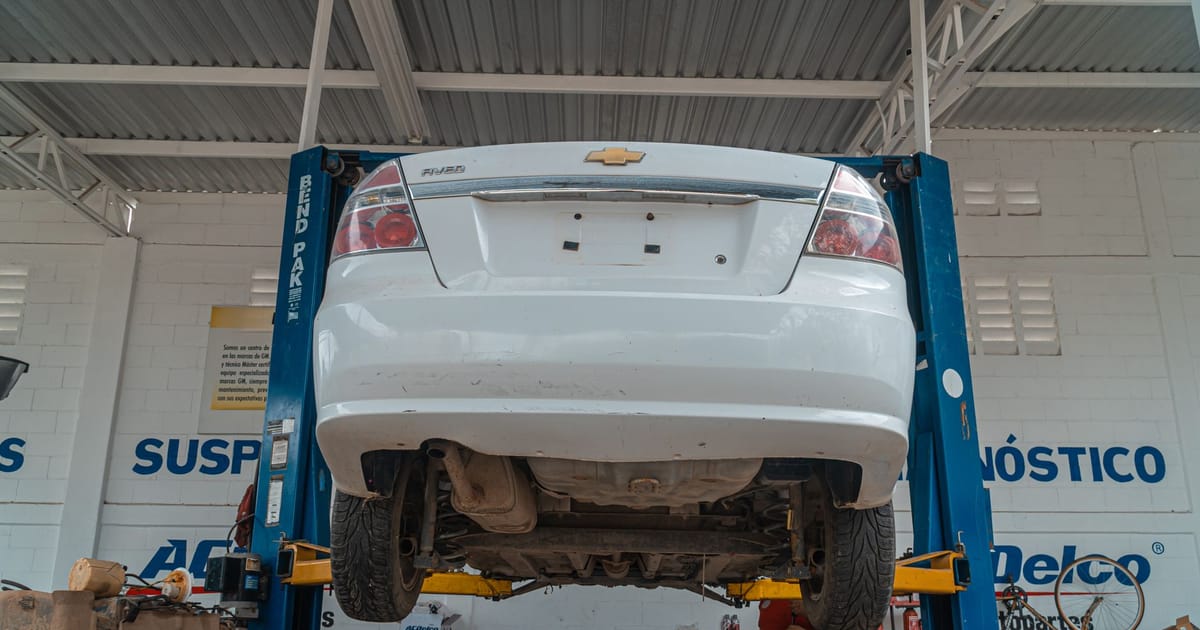
An oil change costs roughly $25 to $120 at most US shops, depending on the oil type and where you go. Conventional oil changes run $25 to $55, synthetic blends $45 to $70, and full-synthetic services $65 to $125, according to RepairPal. Prices vary further by engine size, vehicle make, and local labor rates.
What You Are Actually Paying For
An oil change is a straightforward service: the old oil is drained, the oil filter is replaced, and fresh oil is added to the correct fill level. That is the core of what you are paying for at every shop, from a $35 quick-lube to a $100 dealer visit.
Most shops include a basic multi-point inspection at no extra charge. A technician will typically check tire pressure, top visible fluid levels, and note any obvious issues -- a cracked belt, a leaking hose -- while the car is on the lift. This inspection is a courtesy, not a deep diagnostic. The results are worth a quick look, but do not feel obligated to approve add-on services on the spot.
The oil filter matters. A quality filter traps metal particles and combustion byproducts that circulate through the engine. Shops that advertise unusually low oil-change prices sometimes cut corners on filter quality. If the price seems too low, it is reasonable to ask what brand of filter they use.
Price Ranges by Oil Type
The biggest driver of oil-change cost is the oil itself. Here is what you can expect to pay at a typical independent shop or quick-lube chain, based on RepairPal and AAA data:
| Oil Type | Typical Price Range | Recommended Interval |
|---|---|---|
| Conventional | $25 -- $55 | 3,000 -- 5,000 miles |
| Synthetic Blend | $45 -- $70 | 5,000 -- 7,500 miles |
| Full Synthetic | $65 -- $125 | 7,500 -- 10,000 miles |
| High-Mileage Synthetic | $70 -- $130 | 5,000 -- 7,500 miles |
| European Spec (e.g., 0W-40, LL-01) | $80 -- $150+ | Per manufacturer |
Source: RepairPal national cost estimates; AAA "Your Driving Costs" report. Intervals reflect general guidance -- always follow your owner's manual.
Synthetic costs more per visit, but the interval is longer
A full-synthetic oil change at $90 every 10,000 miles costs about the same annually as a conventional change at $40 every 3,000 miles -- sometimes less. Do the math for your actual driving before assuming conventional is the cheaper choice.
Where You Go Changes the Price
Oil-change prices vary significantly by shop type, often more than people expect. Here is how the three main categories typically compare.
Quick-Lube Chains
Quick-lube shops -- Jiffy Lube, Valvoline Instant Oil Change, Firestone Complete Auto Care, and similar chains -- compete heavily on price and speed. Conventional oil changes at these shops often run $35 to $55 before coupons or loyalty discounts. Full-synthetic packages typically land in the $75 to $100 range, though promotional pricing can push that lower.
The trade-off is upselling pressure. Quick-lube business models depend partly on add-on sales -- air filters, cabin filters, coolant flushes, fuel-system treatments -- recommended during the service. Some of these may genuinely be needed. Others are not. More on that below.
Dealerships
Dealers typically charge $80 to $150 for a full-synthetic oil change, according to AAA. Conventional oil changes at dealers are rarer, since most newer vehicles require synthetic, but where offered they run $60 to $100. Dealers use OEM-specified oil grades, which is the right call for vehicles with tight manufacturer tolerances -- particularly European makes. Service records maintained at the dealer can also support warranty claims.
If your vehicle is still under the factory powertrain warranty, check whether the manufacturer offers complimentary oil changes. Many do for the first two to three years. See our guide to Dealer vs Independent Mechanic: Which Should You Choose? for a broader look at when the dealer premium is justified.
Independent Shops
A well-run independent shop with ASE-certified technicians is often the best combination of price and quality. Independent shops typically charge $50 to $85 for a full-synthetic oil change, with less upselling pressure than quick-lube chains. The downside is that quality varies more -- look for ASE certification, check online reviews, and ask whether they use the oil viscosity and specification your owner's manual calls for.
Why Engine Size and Specialty Oils Raise the Price
A standard four-cylinder engine holds roughly 4 to 5 quarts of oil. A V8 or turbocharged engine can require 6 to 8 quarts, sometimes more. Since oil is priced per quart, larger engines pay meaningfully more for the same service. A truck owner paying $100 for a full-synthetic oil change on a V8 is not necessarily getting gouged -- they are simply buying more oil.
Specialty oil specifications also add cost. Vehicles that require European long-life specs -- common on BMW, Mercedes-Benz, Volkswagen, Audi, and Porsche -- need oils certified to standards like BMW LL-01, VW 502.00, or ACEA C3. These formulations cost more per quart than standard API-licensed oils, and using the wrong spec can void warranty coverage or, in some cases, damage emission-control hardware. If you drive a European vehicle, the higher oil-change cost is not negotiable -- the correct oil is the correct oil.
Turbocharged engines -- increasingly common across all segments -- typically benefit from full synthetic oil due to the high heat turbochargers generate at the oil-supply port. Using conventional or synthetic-blend oil in a turbocharged engine that calls for full synthetic is a reasonable way to end up with a sludged turbocharger sooner than expected.
Upsells to Scrutinize
Quick-lube chains and some dealers generate significant revenue from services recommended during an oil change visit. Some of these are legitimate. Others are performed on schedules far shorter than necessary, or are not needed at all.
Watch the upsell list carefully
When a shop hands you a checklist of recommended services during an oil change, compare every item against your owner's manual schedule -- not the shop's recommendations. Engine air filters, cabin air filters, and coolant flushes are real maintenance items. The question is whether they are actually due based on your mileage and the manufacturer's schedule, not whether the shop thinks they look "a little dirty."
Engine air filter. Typically runs $25 to $50 installed. Consumer Reports notes that quick-lube chains sometimes recommend replacement every 15,000 miles, while most owner's manuals suggest 30,000 to 45,000 miles under normal driving conditions. A dusty filter is not automatically a failing one. Ask to see the filter and compare its condition to the manual's guidance.
Cabin air filter. Usually $20 to $50 installed. Same principle: check your owner's manual interval. A vehicle driven primarily in urban areas or unpaved roads may need it more frequently, but "it looks dirty" is not an interval.
Engine flush (or fuel-system flush). These services -- typically $50 to $150 -- involve running a cleaning agent through the system before the oil change or adding a fuel-system cleaner to the tank. The evidence for their value in a well-maintained engine is thin. If your vehicle has been maintained on schedule with clean oil, a flush is rarely necessary. If you have purchased a used vehicle with an unknown service history and high mileage, a mechanic you trust can give you a more informed recommendation.
Transmission flush. This is a real service -- and a genuinely expensive one if needed -- but it is not an oil-change upsell item. If a shop recommends a transmission flush during a routine oil change, ask for a written explanation of why, get the mileage it is based on, and compare that against your owner's manual before approving it.
How Often Should You Change Your Oil?
The old rule of thumb -- every 3,000 miles -- does not apply to most vehicles made in the last 15 years. Most modern gasoline engines using full-synthetic oil are designed for intervals of 7,500 to 10,000 miles, and some manufacturers specify up to 15,000 miles under normal driving conditions, according to Kelley Blue Book's maintenance guidance.
The definitive answer is in your owner's manual. Many newer vehicles also have an oil life monitoring system -- a dashboard indicator that calculates oil change intervals based on actual driving conditions (short trips, towing, temperature extremes). Following that indicator is reasonable and appropriate.
For a detailed breakdown of interval factors, see our guide to How Often Should You Change Your Oil?
Ignoring the change interval costs more than the service
Running engine oil significantly past its service life allows oxidation, additive breakdown, and sludge formation. Sludge repair -- or in severe cases, engine replacement -- runs thousands of dollars. An oil change is the least expensive engine maintenance you can perform.
DIY Oil Change: What It Actually Costs
Changing your own oil costs $25 to $55 in materials for most vehicles -- roughly $20 to $40 for oil (four to five quarts at $5 to $8 per quart for full synthetic) and $5 to $15 for a quality oil filter. You will also need a drain pan, a wrench, and a safe way to raise the vehicle.
The savings over a quick-lube shop are real but modest -- typically $15 to $35 per visit compared to a coupon-priced conventional oil change, and potentially more versus a full-synthetic dealer visit. Factor in your time and the need to properly dispose of used oil (most auto-parts stores accept it for free).
DIY is most cost-effective for higher-frequency conventional oil changes on simple four-cylinder engines. For turbocharged engines requiring European-spec synthetic, the correct oil is often harder to source in stores, and the savings shrink.
For those who want a complete look at this decision, our guide to Synthetic vs Conventional Oil: Which Is Right for Your Car? covers the technical side.
Getting a Fair Price
A written, itemized estimate before any service is your baseline. Ask what oil brand and viscosity they plan to use and confirm it matches what your owner's manual specifies. If the price quoted differs from what you were told on the phone, ask why before approving the work.
Quick summary: what to ask before approving an oil change
- What oil brand and specification will you use? Does it match my owner's manual?
- What filter brand are you using?
- Is the multi-point inspection included, or is that a separate charge?
- Are there any additional services being recommended today? If so, provide a written explanation of why each is due.
Look for shops with ASE-certified technicians. ASE certification is not a guarantee of honesty, but it is a verifiable credential that confirms the technician has passed testing in their service category. You can search for certified shops at the ASE consumer site.
For more on navigating shop pricing in general, see our guide to How to Read a Car Repair Estimate Without Getting Ripped Off and our comparison of Dealer vs Independent Mechanic: Which Should You Choose?
Frequently asked questions
How much does a full-synthetic oil change cost?
Full-synthetic oil changes typically run $65 to $125 at most shops, according to RepairPal. Dealers often charge at the higher end of that range. The price reflects both the cost of synthetic oil and the longer drain interval -- usually 7,500 to 10,000 miles -- which can offset the premium over time.
Is a synthetic oil change worth the extra cost?
For most modern vehicles, yes. Full synthetic oil lasts two to three times longer between changes than conventional oil. If you pay $100 for synthetic every 10,000 miles instead of $45 for conventional every 3,000 miles, the annual cost is often similar or lower. Check your owner's manual for the manufacturer's recommendation.
What is included in a standard oil change?
A standard oil change includes draining the old oil, replacing the oil filter, and refilling with fresh oil to the correct capacity and specification. Many shops also perform a basic multi-point inspection -- checking tire pressure, fluid levels, and lights -- at no extra charge, though this varies by shop.
Why do dealers charge more for oil changes than quick-lube shops?
Dealers typically charge higher labor rates and use OEM-specified oils, which can raise the price by $20 to $40 compared to an independent shop or quick-lube chain. The work quality is generally comparable. You are paying for brand familiarity and the convenience of keeping service records at one location.
Can I save money by changing my oil myself?
Yes. DIY oil changes cost $25 to $55 in materials -- oil and a filter -- depending on oil type and engine size. You need basic tools and a safe way to raise the vehicle. Factor in your time and disposal of the old oil. For most people, the savings over a quick-lube shop are modest.