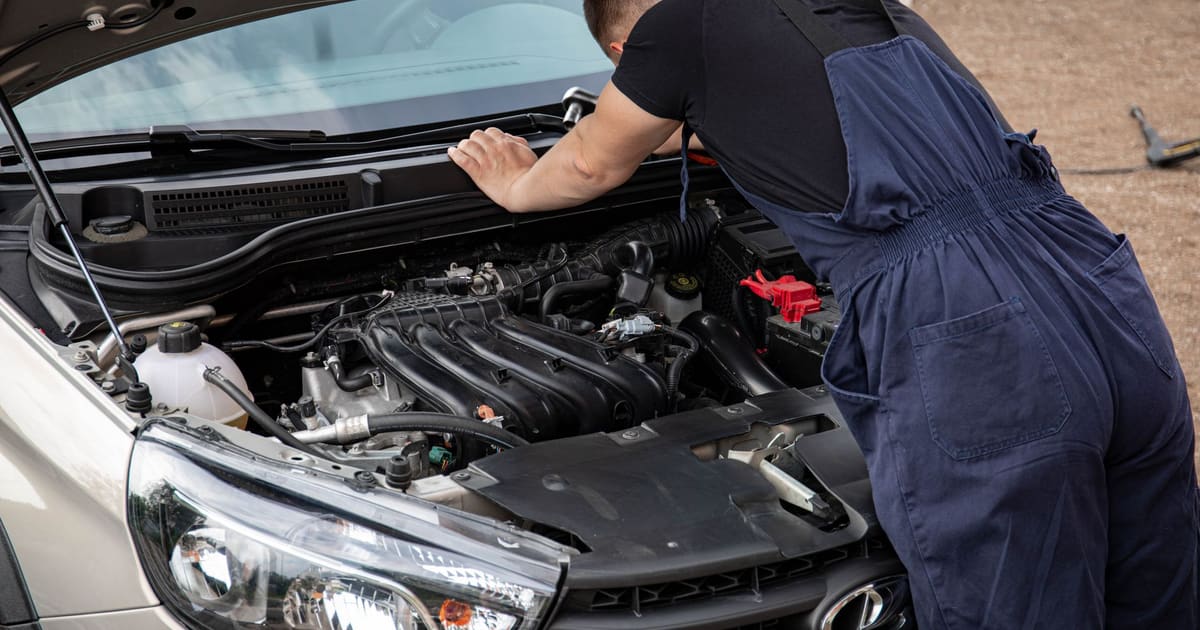
A car that crosses 100,000 miles is not a car about to die. It is a car entering a different maintenance phase. The components that were new when you bought it -- rubber seals, cooling hoses, suspension bushings, ignition parts -- have experienced a decade or more of heat cycles, vibration, and chemical exposure. None of that disqualifies the car from another 100,000 miles of service. It does require a more systematic approach to what you watch for and when.
What Changes About Car Maintenance After 100,000 Miles?
The maintenance fundamentals do not change. Oil changes, tire pressure, brake inspections, and filter replacements continue on the same logic. What changes is the probability of certain categories of failure and the cost consequence of deferring intervention.
Below 100,000 miles, most maintenance is scheduled preventive work -- replacing things at manufacturer intervals before they fail. After 100,000 miles, an increasing share of maintenance becomes condition-based monitoring: watching for the early signs of wear in components that are statistically more likely to need attention in this mileage range.
The other shift is in the economics. Repairs that might have been discretionary at 60,000 miles become genuinely necessary at 120,000 because deferred maintenance compounds. A minor coolant seep ignored at 110,000 miles can become an overheating event at 130,000. The cost of the seep repair is a fraction of the cost of the overheating repair that follows.
The Repairs Most Likely to Strike After 100k
Frequency data from RepairPal and independent shop surveys points to several categories that see elevated failure rates in the 100,000 to 200,000 mile range:
Cooling system components. The thermostat, water pump, and cooling hoses are the most common cooling-related failures in this mileage range. Water pump bearings wear; hose walls harden and crack; thermostats stick open or closed. A cooling system pressure test and inspection of all hoses at each oil change after 100,000 miles is a reasonable addition to your service routine.
Timing belt (if not yet replaced). On timing-belt engines -- Honda, Subaru, Toyota four-cylinders, many Mitsubishi and Kia models, and some Volkswagen and Audi engines -- the belt has a finite service life typically specified between 60,000 and 105,000 miles. If the belt has never been replaced and the car is past 90,000 miles, this is the single highest-priority service item. A belt failure at highway speed can destroy the engine in seconds on interference-design engines, which most modern timing-belt engines are.
Suspension bushings and ball joints. Rubber suspension bushings harden and develop cracks over time. Ball joint boots crack, allowing grease to escape and contamination to enter. These parts do not fail suddenly in most cases -- they degrade gradually, affecting steering precision and tire wear. An inspection of all suspension points at 100,000 miles and annually thereafter allows you to catch worn items before they require emergency attention.
Ignition system components. Spark plugs on standard copper-core designs should have been replaced by now. Iridium and platinum plugs last longer -- some to 100,000 miles. Ignition coils, coil boots, and plug wires see increased failure rates after extended heat exposure. A rough idle, misfire code, or poor fuel economy in a high-mileage car often traces to ignition components.
Fluids and Seals: What Needs Extra Attention
Fluids are the least expensive maintenance item with the highest consequence when neglected. After 100,000 miles, the fluid service schedule matters more, not less.
Engine oil. If you have been using conventional oil, switching to a high-mileage formula can help address minor seepage. The seal conditioners in high-mileage oils are most effective on minor seepage; they do not fix visible drips. See our synthetic versus conventional oil guide for the full case for each type at high mileage.
Transmission fluid. Automatic transmission fluid degrades over heat cycles. Many manufacturers originally labeled their transmission fluid as "lifetime fill," a claim that has not held up in real-world use. Vehicles that have deferred transmission fluid service past 100,000 miles face elevated risk of shudder, slipping, and eventual failure. If the fluid has never been changed and the transmission is showing any symptoms, consult a transmission specialist before deciding between a fluid service and a full repair. See our transmission repair cost guide for context on what full transmission work costs.
Coolant. Antifreeze degrades chemically over time as its corrosion inhibitors are consumed. Most shops recommend a coolant flush every 50,000 miles or five years. At high mileage, degraded coolant accelerates corrosion inside the cooling system, which attacks the aluminum surfaces of the head, radiator, and water pump.
Power steering fluid (on hydraulic systems). Like coolant, power steering fluid degrades and can become abrasive when its additives are consumed. A drain-and-fill at high mileage is inexpensive and reduces wear on the pump and rack seals.
Should You Switch to High-Mileage Oil?
High-mileage engine oils contain several additives designed for aging engines:
- Seal conditioners that cause rubber seals to swell slightly, reducing minor seepage
- Higher detergent levels that help dissolve sludge deposits in engines with long oil change intervals
- Viscosity modifiers adjusted to compensate for engine wear that increases internal clearances
Whether you should switch depends on your car's current condition. If you have no oil leaks and no burning, conventional or full synthetic of the correct grade may be fine. If you have minor seepage at gaskets or seals -- evidence of oil residue without active dripping -- high-mileage oil is worth trying before committing to a seal replacement.
High-mileage oil does not hurt anything in a well-maintained engine. It also does not offset severe wear or fix major leaks. The best use case is moderate seepage at older seals on a vehicle that is otherwise running well.
How to Decide What Is Worth Repairing on an Older Car
Not every repair is worth doing on a high-mileage vehicle. The decision framework is straightforward when the repair is safety-critical -- brakes, steering, tires, and anything that affects vehicle control are not optional. Everything else involves a calculation.
Safety-critical items: repair regardless. Brake problems, steering failures, tire wear beyond safe limits, and suspension components that affect vehicle control are repaired. There is no version of "deferred maintenance" that applies to systems that keep the car safe to drive.
Drivetrain items: weigh repair cost against vehicle value. If a repair costs more than 50 percent of the vehicle's market value, the repair-versus-sell calculation becomes genuinely close. Use our repair versus sell guide to run the numbers on your specific situation. The general principle is that a single expensive repair does not automatically make keeping the car wrong -- it depends on what other repairs are likely to follow and how the total compares to replacement cost.
Cosmetic and comfort items: discretionary. Air conditioning on a high-mileage car, infotainment repairs, minor interior wear -- these can be deferred or skipped entirely without affecting the car's function or safety.
Deferred cooling system maintenance is the highest-risk category
An overheating engine can warp a cylinder head or crack a block in minutes. The cost of a cylinder head repair or engine replacement ranges from $2,000 to $6,000 or more -- many times the cost of the hose, thermostat, or water pump that could have prevented it. On a high-mileage car, cooling system inspections deserve priority.
Building a Maintenance Reserve Fund
High-mileage vehicles are predictable in one key way: maintenance costs increase. Planning for that increase makes it manageable.
A reasonable approach is to set aside a monthly amount specifically for vehicle repairs separate from the car payment. If you are no longer making car payments, redirecting $150 to $300 per month to a vehicle maintenance reserve covers most of what a well-maintained high-mileage vehicle will need in a given year without the cost being disruptive when it arrives.
The alternative -- treating every repair as an unexpected crisis -- is financially more stressful than it needs to be. High-mileage vehicles fail in known categories. Budgeting for those categories converts an apparent uncertainty into a planned expense.
Warning Signs That a High-Mileage Car Is Near the End
Most high-mileage vehicles give clear warning before they reach a point where continued repair is uneconomical. The warning signs worth taking seriously:
Multiple simultaneous systems failing. A single repair at 130,000 miles is normal. Three major systems requiring attention within six months may indicate the car is entering a rapid decline phase.
Evidence of deferred maintenance on the engine or transmission. Sludge on the valve cover underside, dark transmission fluid that has never been serviced, and a history of infrequent oil changes all reduce the odds that the engine will run reliably much longer.
A structural problem, rust failure, or collision damage that exceeds repair cost. These are sometimes the real limiting factor on high-mileage vehicles, particularly in northern climates where road salt accelerates frame and floor pan corrosion.
A major repair quote that exceeds the vehicle's market value. When a single repair estimate equals or exceeds what the car would sell for, the economics shift decisively. That does not automatically mean it is wrong to repair -- there are scenarios where it still makes sense -- but it changes the analysis. Use the repair versus sell framework to run the numbers honestly.
For any specific repair you are weighing on a high-mileage vehicle, finding an honest mechanic with experience in your make and model is worth the effort. Our guide to finding an honest mechanic covers how to identify shops that give straight assessments rather than recommendations shaped by sales pressure.
Frequently asked questions
What maintenance does a car need after 100,000 miles?
After 100,000 miles, prioritize coolant system integrity (hoses, thermostat, water pump), transmission fluid condition, spark plug replacement if not already done, and a thorough inspection of suspension bushings and ball joints. If you have a timing belt engine and the belt has not been replaced, that becomes urgent. Seals and gaskets also need closer monitoring for weeping leaks.
Is it worth maintaining a car with 150,000 miles?
Usually yes, if the car has been reasonably maintained and has no catastrophic failures pending. A car at 150,000 miles with no major drivetrain issues costs far less per month to keep running than a car payment on a replacement vehicle. The key question is repair frequency: one or two repairs per year at a few hundred dollars each is usually still favorable compared to a $350 to $600 monthly payment.
What is high-mileage engine oil and does it help?
High-mileage oils contain seal conditioners -- typically ester compounds -- that cause rubber seals and gaskets to swell slightly, which can reduce minor leaks that develop as seals harden with age. They also often carry more detergent additives. For a car over 75,000 miles showing minor seepage, high-mileage oil can help. It does not fix a significant leak, and it does not change engine wear rates meaningfully for a well-maintained engine.
What parts usually fail between 100,000 and 200,000 miles?
Cooling system components (thermostat, water pump, hoses) commonly fail in this range. Suspension bushings, ball joints, and struts wear through on most vehicles. Oxygen sensors and ignition coils become more likely to fail. On timing-belt engines, if the belt has not been replaced, this is the range where a failure is probable. Transmission problems, when they occur, often show up in this mileage range on vehicles with deferred fluid service.
How do I know if my high-mileage car is worth keeping?
Add up the realistic repair cost for the next 12 months based on what the car currently needs and what is likely coming based on mileage. Compare that annual total against the cost of a replacement vehicle payment for the same period. If repairs are under 50 percent of the vehicle's market value and the drivetrain has no catastrophic issues pending, keeping the car is almost always the better financial decision.
Does high mileage affect resale value significantly?
Yes. Most used-car pricing guides show a meaningful price drop at 100,000 miles. A well-maintained vehicle with documented service records loses less value than one without records. If you are planning to sell, organizing your maintenance documentation and addressing visible maintenance items before listing can recover some of that value. Private-party sales typically return more than dealer trade-in on high-mileage vehicles.